
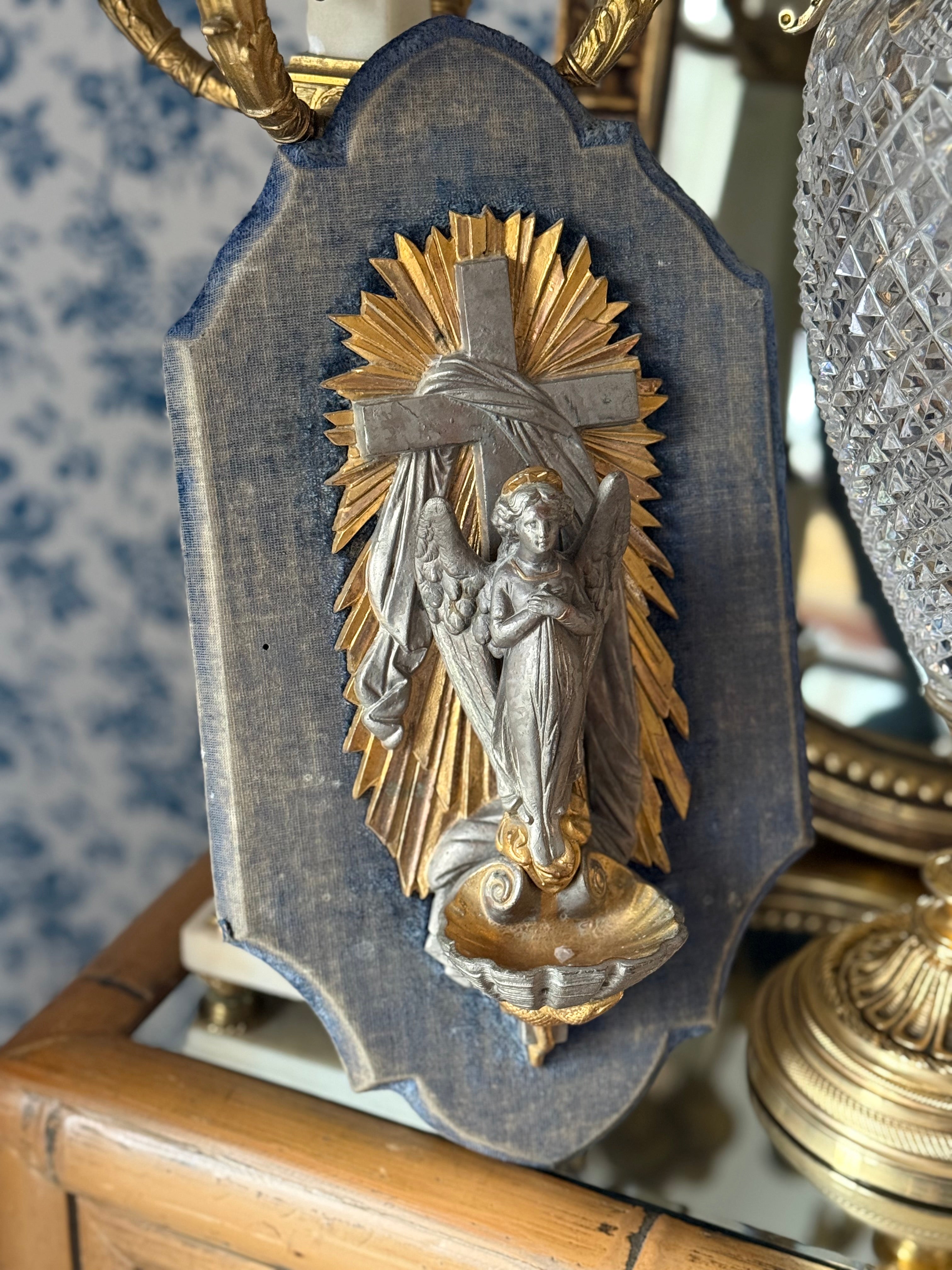
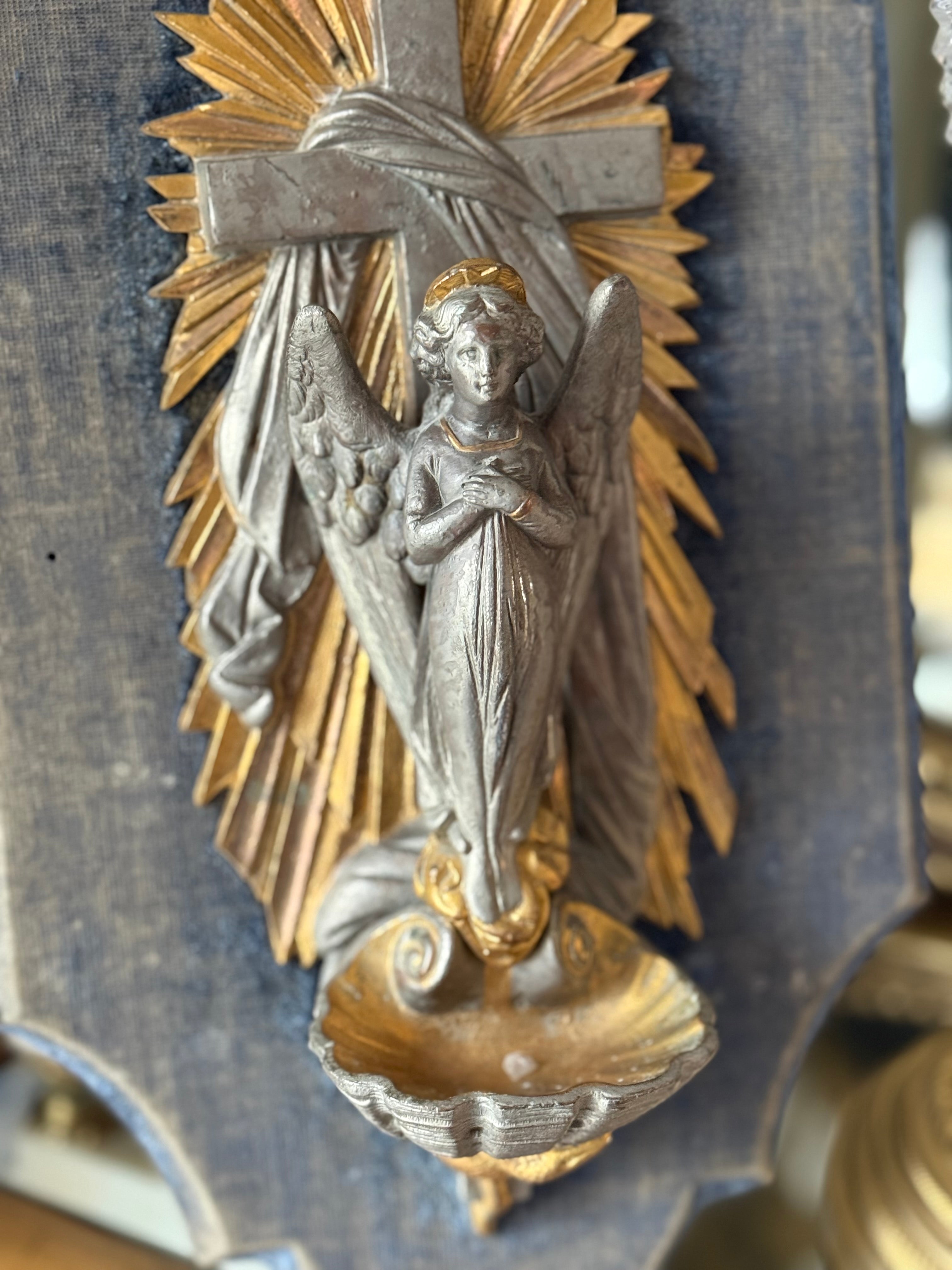
A striking example of 19th-century French domestic piety, this wall-mounted holy water font — known in French as a bénitier de maison — would have held pride of place at the entrance of a Catholic household, allowing the faithful to bless themselves upon entering or leaving the home.
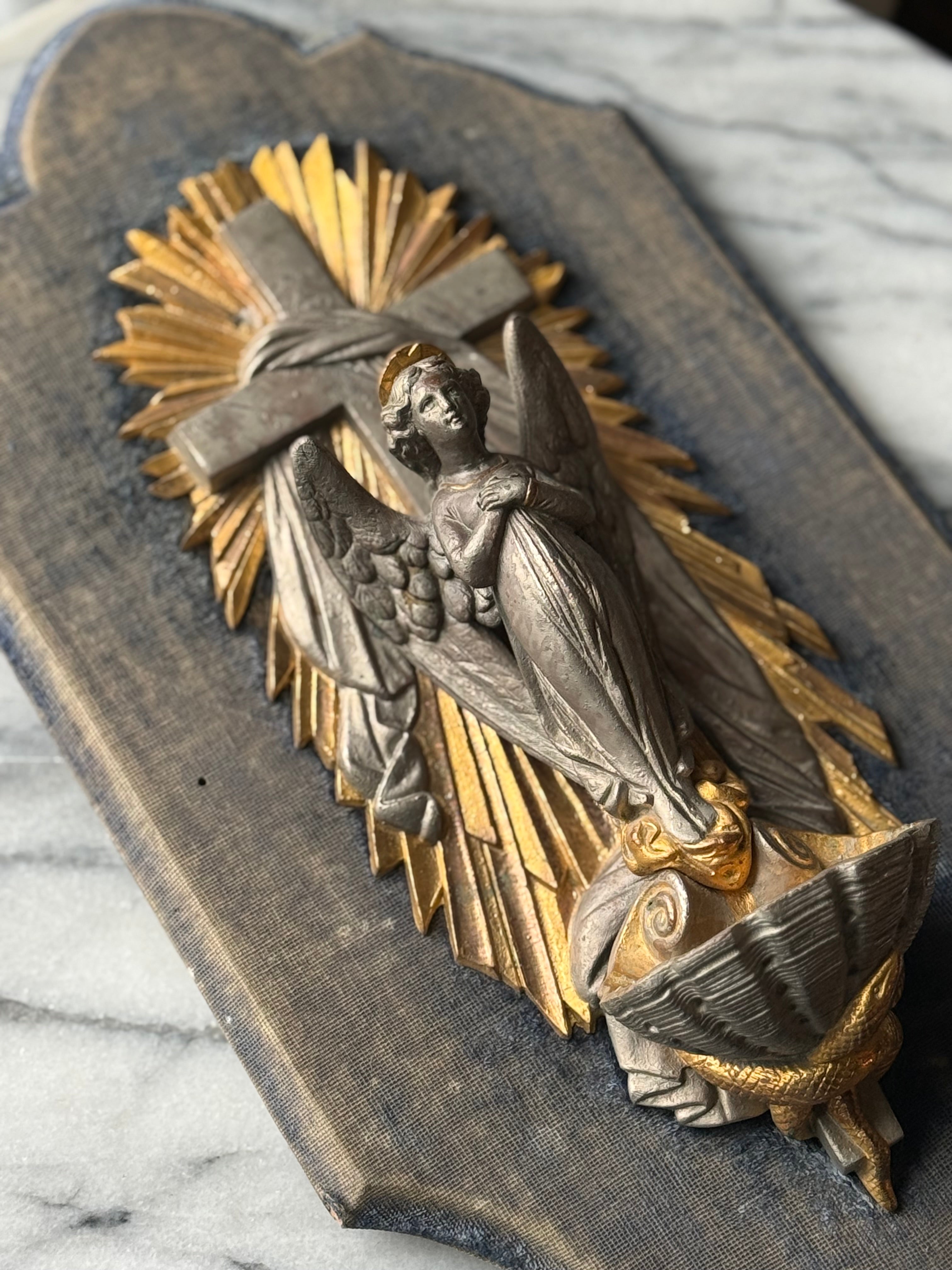
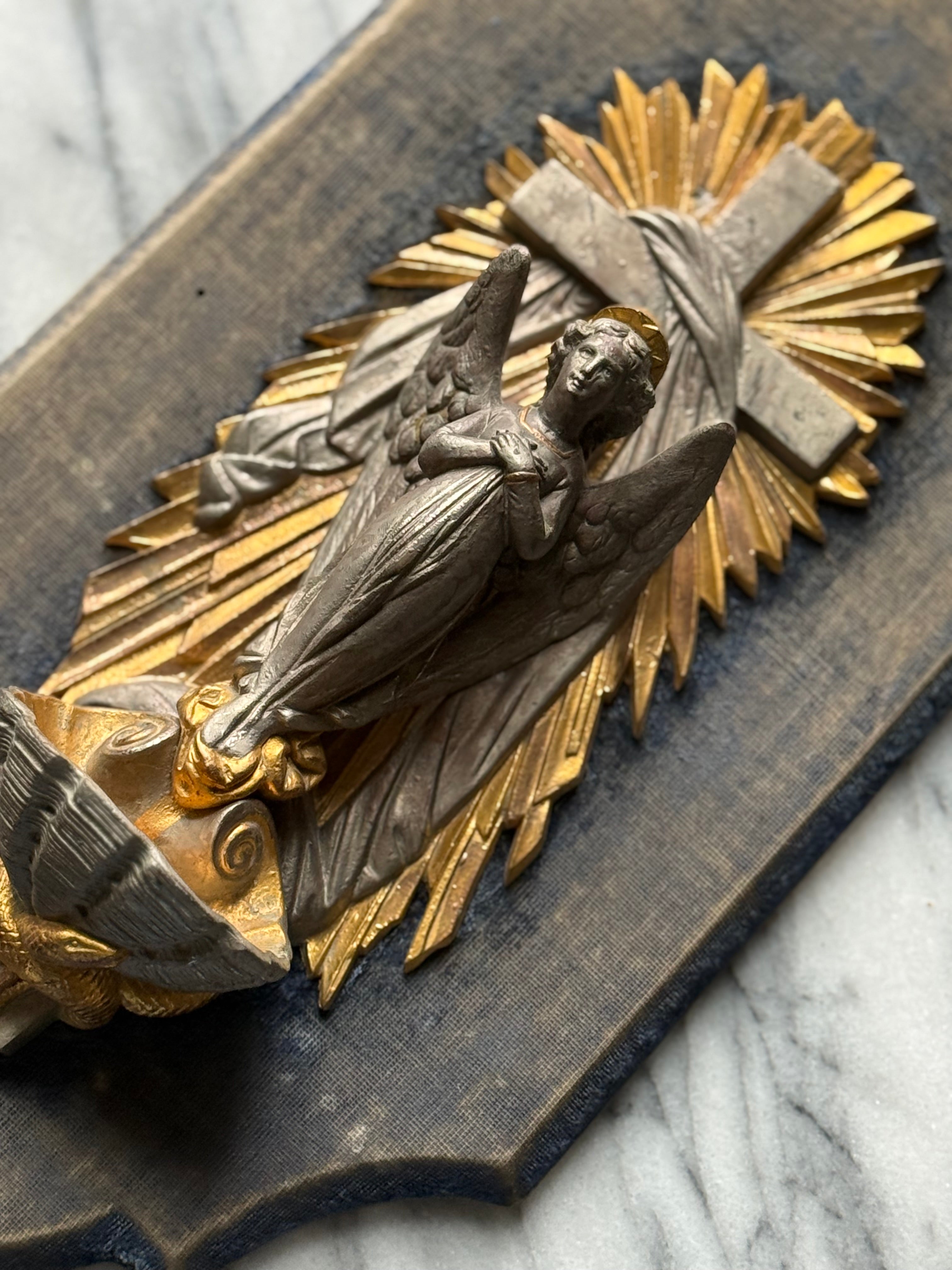
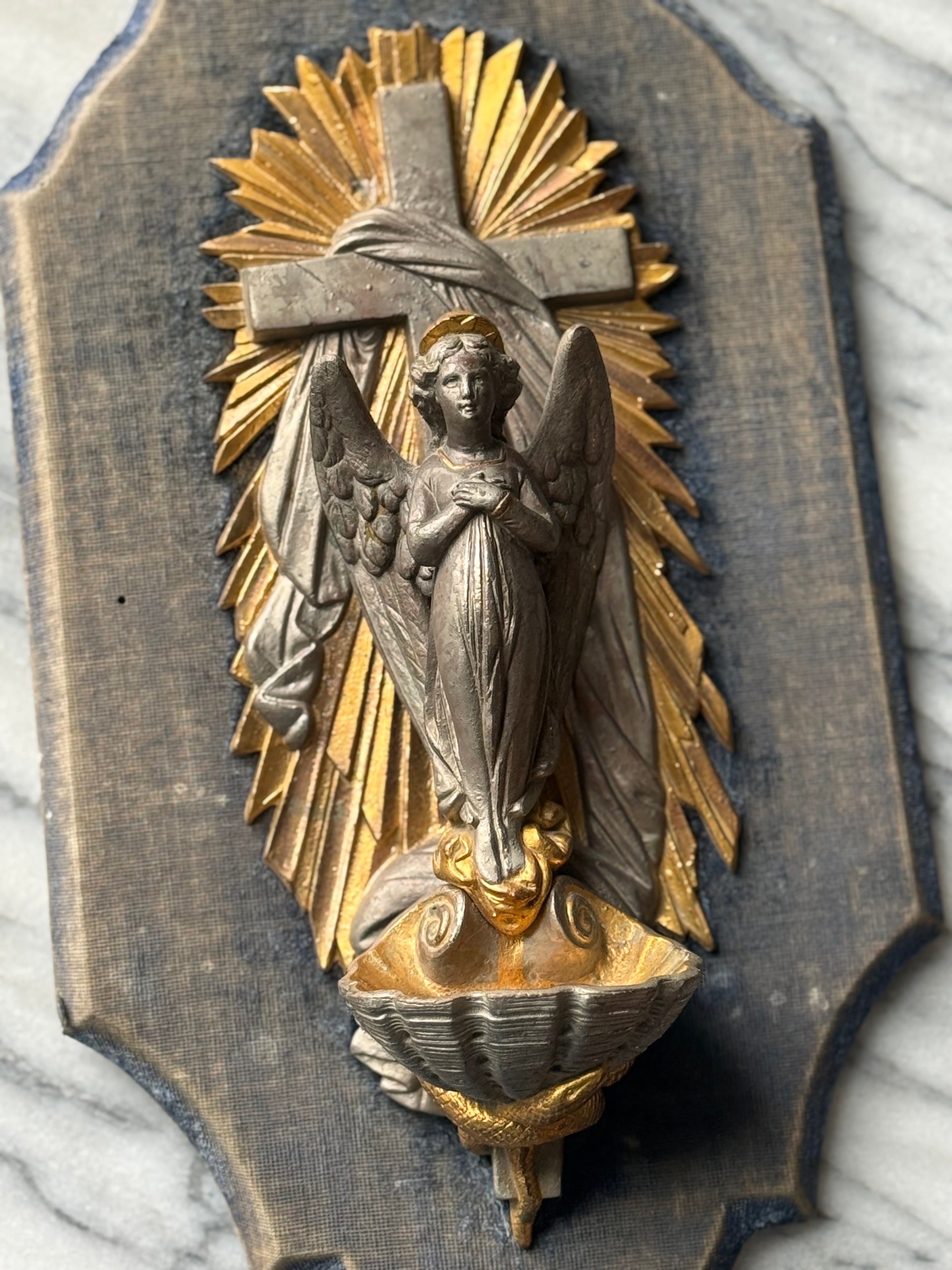
The central relief is a tour de force of devotional craftsmanship: a winged angelrendered in silver-toned spelter kneels reverently before a Latin cross, arms outstretched in adoration, robes falling in classical folds. Behind the figure, dramatic gilt sunrays burst outward from the cross in every direction — a visual symbol of divine light and glory. The detail is exceptionally fine, from the feathering of the angel's wings to the delicate halo crowning her head.
At the base, a scalloped shell-form basin — the traditional vessel for holy water — is rendered in matching silver and gilt, with a scrolled golden acanthus flourish anchoring it to the plaque. The entire assembly is mounted on a shaped cartouche of deep navy fabric-covered board, its silhouette echoing the Baroque altarpiece tradition.
The two-tone finish — cool silver figures against warm gilt rays — is characteristic of quality French religious metalwork of the Second Empire and Third Republic periods (circa 1860–1900), when such devotional objects were produced by specialist Parisian and regional ateliers for both household and church use.
The piece retains its original fabric board backing with honest age to both the textile and the metal. The relief casting is crisp and undamaged, with a beautiful natural patina. Ready to hang — a devotional object of genuine artistic merit that works equally as a collector's piece or a meaningful sacred accent in any interior.